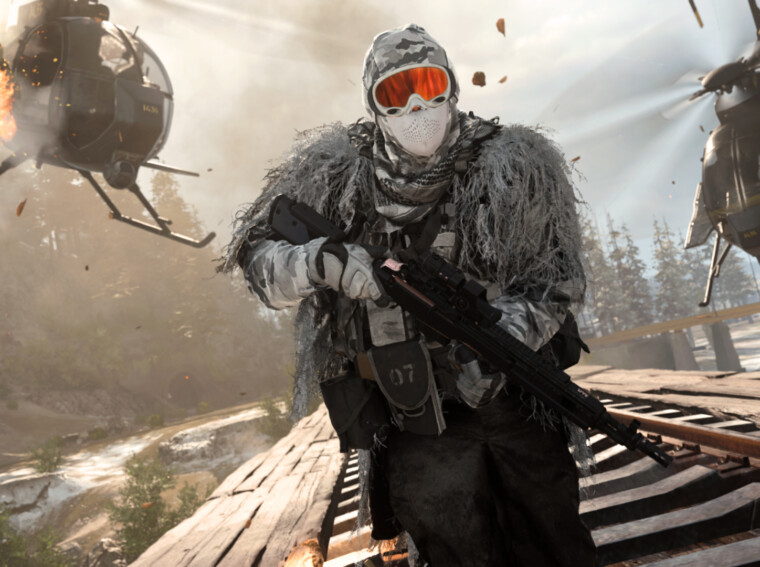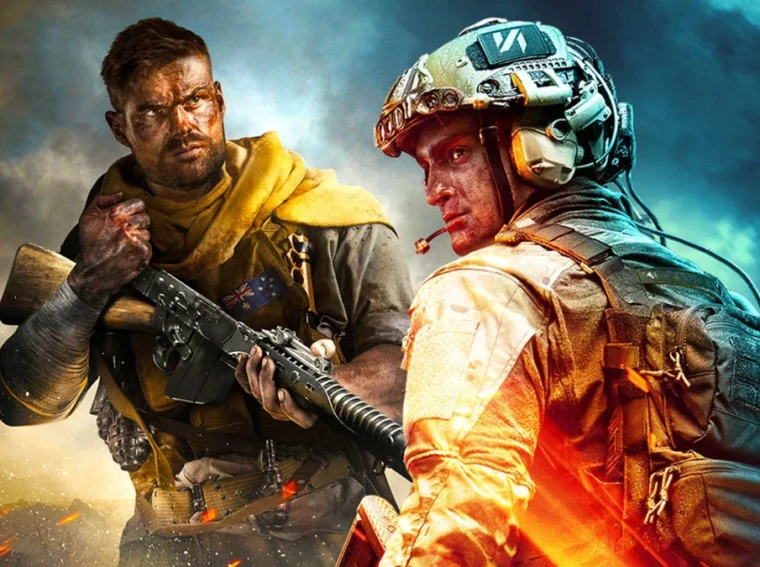
The long-running rivalry between the Call of Duty and the Battlefield has always been defined by contrast. One built its identity on fast, tight 6v6 combat, the other on large-scale, vehicle-driven warfare. But in 2025, that contrast has narrowed more than at any point in the past decade — and the two series now feel like they’re competing in the same space.
Two franchises, one shared battlefield
Historically, the difference was obvious. Call of Duty focused on small, fast-paced arenas where reflexes and map knowledge mattered most. Battlefield leaned into massive 32v32 (and beyond) battles, combining infantry combat with tanks, helicopters, and jets across sprawling environments.
But over time, those boundaries have blurred. Modern Call of Duty entries have expanded their scale through modes like Ground War and Skirmish, introducing larger player counts and vehicle combat. At the same time, Battlefield has moved in the opposite direction, adding more compact infantry-focused playlists designed to compete directly in the space Call of Duty has long dominated.
The result is a convergence: both franchises now offer fast infantry combat, large-scale battles, and hybrid modes that sit somewhere in between.
Battlefield 6 pushes into Call of Duty territory
Recent changes in the Battlefield formula highlight this shift clearly. Alongside traditional large-scale warfare modes, newer infantry-only playlists focus on smaller, more controlled engagements — essentially mirroring the pacing and structure of Call of Duty’s core multiplayer experience.
At the same time, the return to form after the rocky launch of earlier entries has helped restore confidence in the series. A stronger technical foundation, more stable launch, and expanded content tools like Battlefield Portal have helped rebuild its reputation and bring players back into the ecosystem.
Black Ops 7 expands upward in scale
On the other side, the latest entry in the Call of Duty lineup — Call of Duty: Black Ops’s newest installment — continues to experiment with larger-scale modes alongside its traditional 6v6 structure.
Modes like Skirmish push toward 20v20 engagements, blending infantry combat with vehicles and more open map design. While Ground War-style experiences are no longer the central focus, the franchise still offers multiple layers of scale within a single multiplayer ecosystem.
The downside is familiarity. Despite technical polish and tight gunplay, much of the experience feels iterative, closely following the structure established in previous entries rather than reinventing it.
Gunplay vs scale: different strengths, same space
Even as the two franchises converge, differences still remain in feel and execution.
Call of Duty retains its signature responsiveness — clean gunplay, fast movement, and highly readable engagements. Battlefield, by contrast, maintains a heavier, more grounded feel, where long-range combat and large-scale destruction play a much bigger role in moment-to-moment gameplay.
One area where Battlefield still clearly stands apart is environmental destruction. Buildings collapsing under tank fire or sniper positions being erased by explosives continue to create dynamic, unpredictable combat scenarios that Call of Duty has never fully replicated.
Campaign struggles on both sides
Despite strong multiplayer foundations, neither franchise is currently delivering standout single-player experiences.
In the latest Call of Duty entry, the campaign leans heavily into co-op design but struggles with narrative cohesion and structure. Instead of a focused story experience, it often feels like a loosely connected sequence of combat encounters with limited emotional weight.
Battlefield’s campaign, while more traditional, also struggles to land its narrative. Attempts to mirror cinematic storytelling from older Call of Duty titles result in underdeveloped characters and uneven pacing, even if the presentation occasionally delivers large-scale spectacle.
Extra modes define long-term value
Beyond core multiplayer and campaigns, both franchises rely heavily on secondary modes to extend engagement.
Call of Duty continues to evolve its Zombies mode, which remains one of the most fully realized cooperative experiences in the FPS genre. Large maps, layered Easter eggs, and structured progression keep it a standout feature.
Battlefield counters with Portal, a creative sandbox system that allows players to build custom modes and experiences. While less polished in execution compared to Zombies, it offers long-term flexibility and community-driven variety.
A rivalry without a clear winner
For the first time in years, the gap between Call of Duty and Battlefield has narrowed to the point where neither clearly dominates in overall scope. Each has strengths the other lacks: Call of Duty leads in responsiveness and mode depth, while Battlefield excels in scale and environmental dynamism.
Even recent missteps — from iterative design cycles in Call of Duty to uneven experimentation in Battlefield — haven’t broken the competitive balance. Instead, they’ve pushed both franchises toward a shared middle ground.
The closest they’ve ever been
What used to be a clear contrast between arcade-like precision and large-scale simulation has evolved into two overlapping interpretations of modern FPS design.
And while there may still be preferences on either side, the reality is simple: these two series are no longer separated by philosophy. They’re competing directly in the same arena — and shaping each other more than ever before.