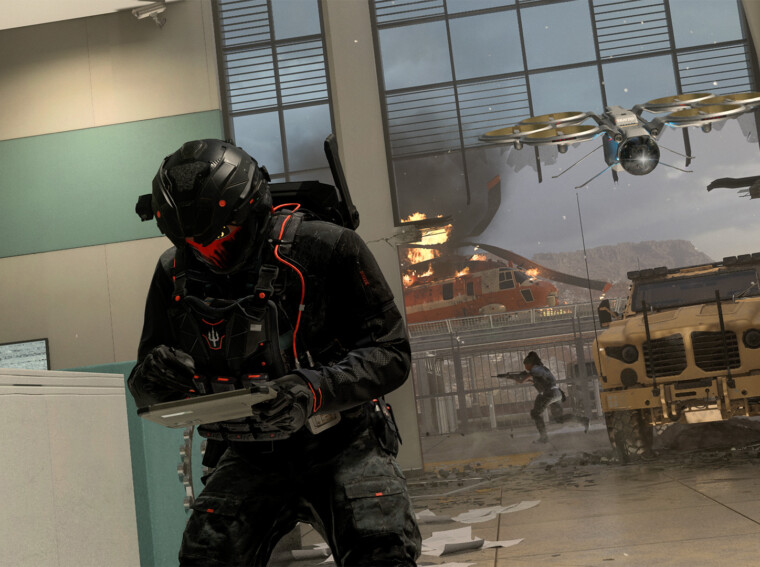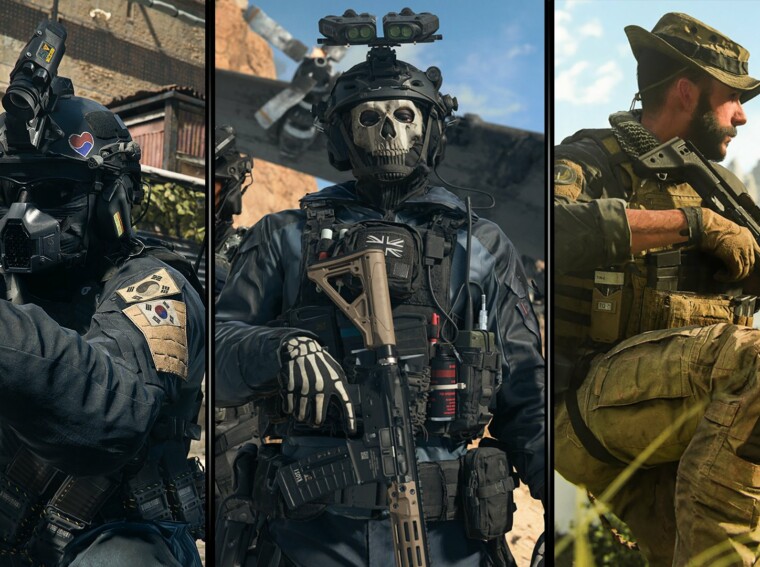
The development strategy behind the Call of Duty is undergoing a notable shift, as Activision moves away from releasing back-to-back entries in the same sub-series like Modern Warfare and Black Ops. While the change signals awareness of growing player fatigue, it also raises questions about whether the solution actually addresses the core issue.
Breaking the annual sub-series cycle
For nearly two decades, Call of Duty followed a predictable rhythm: different studios rotated yearly releases, with Infinity Ward, Treyarch, and Sledgehammer Games each taking turns. Within that structure, the Modern Warfare and Black Ops brands became alternating pillars of the franchise.
That pattern has recently broken down. Consecutive releases within the same sub-series — such as Modern Warfare 2 followed quickly by Modern Warfare 3, and more recently Black Ops 6 followed by Black Ops 7 — blurred the identity of individual entries. Instead of feeling like distinct games, some releases began to resemble expanded versions of their predecessors.
The new announcement confirms that Activision intends to stop this practice moving forward.
A response to fatigue, not a reinvention
The timing of the decision reflects growing pressure on the franchise. Recent entries have struggled with reception and player retention, while competitors — most notably the Battlefield series — have capitalized on longer development cycles and more substantial reinvention between releases.
In that context, the shift away from rapid-fire sequels reads less like innovation and more like correction. The underlying issue isn’t just sequencing — it’s the pace of production and the expectation that major entries must arrive annually regardless of development readiness.
Why annual releases became a problem
The core criticism is straightforward: when full-priced games release too close together, they risk feeling iterative rather than evolutionary. Even when systems improve, players often perceive them as updates rather than new experiences.
This perception has been reinforced by recent development constraints. Some design changes appear to have been reset or reworked between consecutive entries, likely due to limited development time. The result is a cycle where progress feels inconsistent, and innovation struggles to accumulate across titles.
Even strong components — such as campaign design in Black Ops 6 or improved multiplayer systems in Black Ops 7 — risk being undercut when the next release arrives too quickly to build on them meaningfully.
Multiplayer strength vs. structural weakness
Not all criticism is directed at gameplay. In fact, core multiplayer and Zombies experiences in recent entries remain strong, with some of the most ambitious seasonal content expansions in the series’ history.
However, the problem is structural rather than mechanical. Live-service support has improved longevity, but it doesn’t fully compensate for the instability caused by rapid full-game turnover. Players may enjoy individual modes, but the broader ecosystem still resets too frequently to allow long-term evolution.
A slower cadence — but not necessarily a better model
The proposed solution — avoiding consecutive sub-series releases — is a step toward reducing fatigue, but it does not fundamentally change the annual release pressure that defines the franchise.
Unlike competitors that take multi-year gaps between major entries, Call of Duty continues to operate under a tight cycle. That limits how much innovation can realistically occur between launches, even with improved planning.
In contrast, franchises like Battlefield have shown that longer development windows can produce more substantial redesigns, albeit not without their own risks.
The real issue: time vs. expectations
At its core, the challenge is not just about which sub-series follows which. It’s about whether the development teams are given enough time to meaningfully evolve each entry before the next one begins production.
Without that shift, even well-intentioned structural changes risk becoming surface-level adjustments rather than real solutions. The concern is that the franchise is optimizing its release order without fully addressing the pressure that created the problem in the first place.
A franchise at a crossroads
Activision’s current direction acknowledges that something wasn’t working. But acknowledgment and correction are not the same as transformation.
The future of Call of Duty will depend less on how releases are scheduled, and more on whether the series is willing to slow down enough for innovation to actually stick.